Bhera’s Pride: Only Two High Schools in District Shahpur ( later Sargodha). Government High School & Ayra High School, Bhera
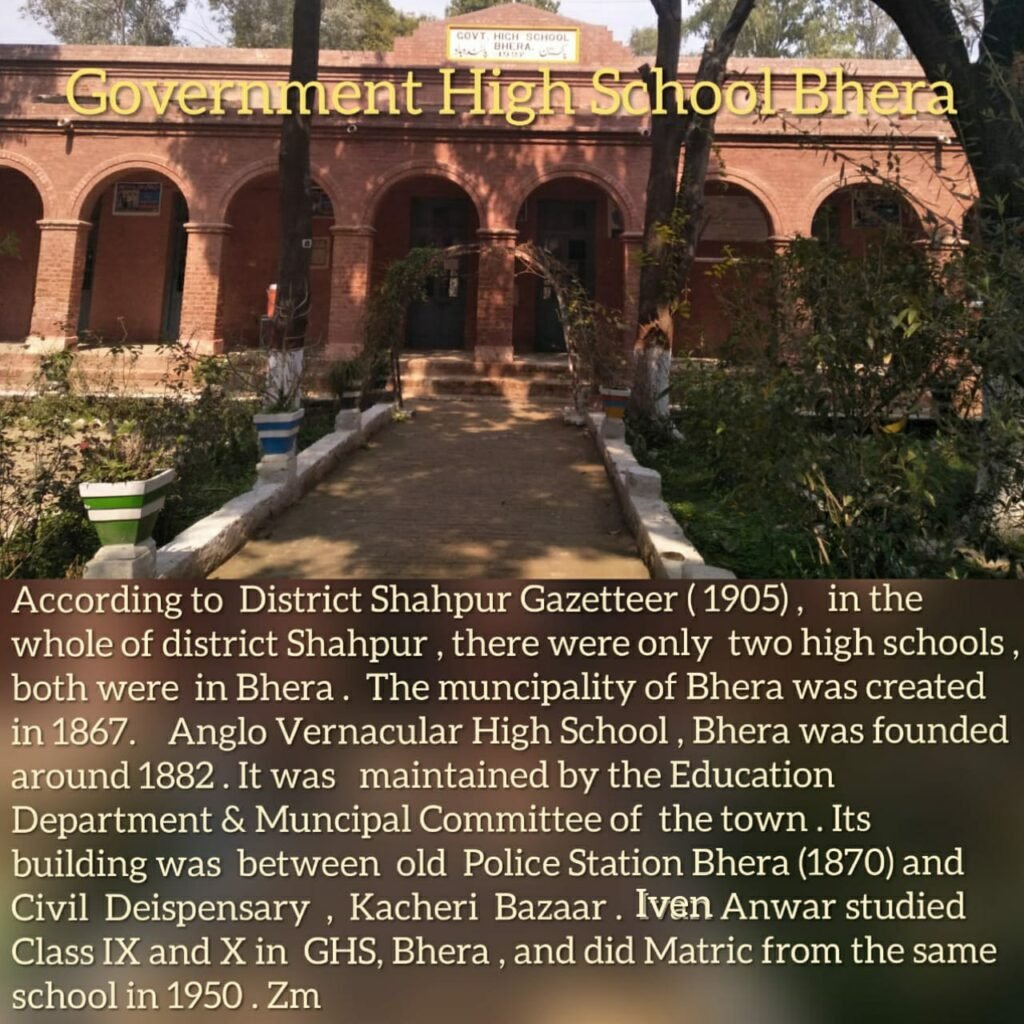
According to the District Shahpur Gazetteer (1905), the entire district had only two high schools, and both were located in Bhera.
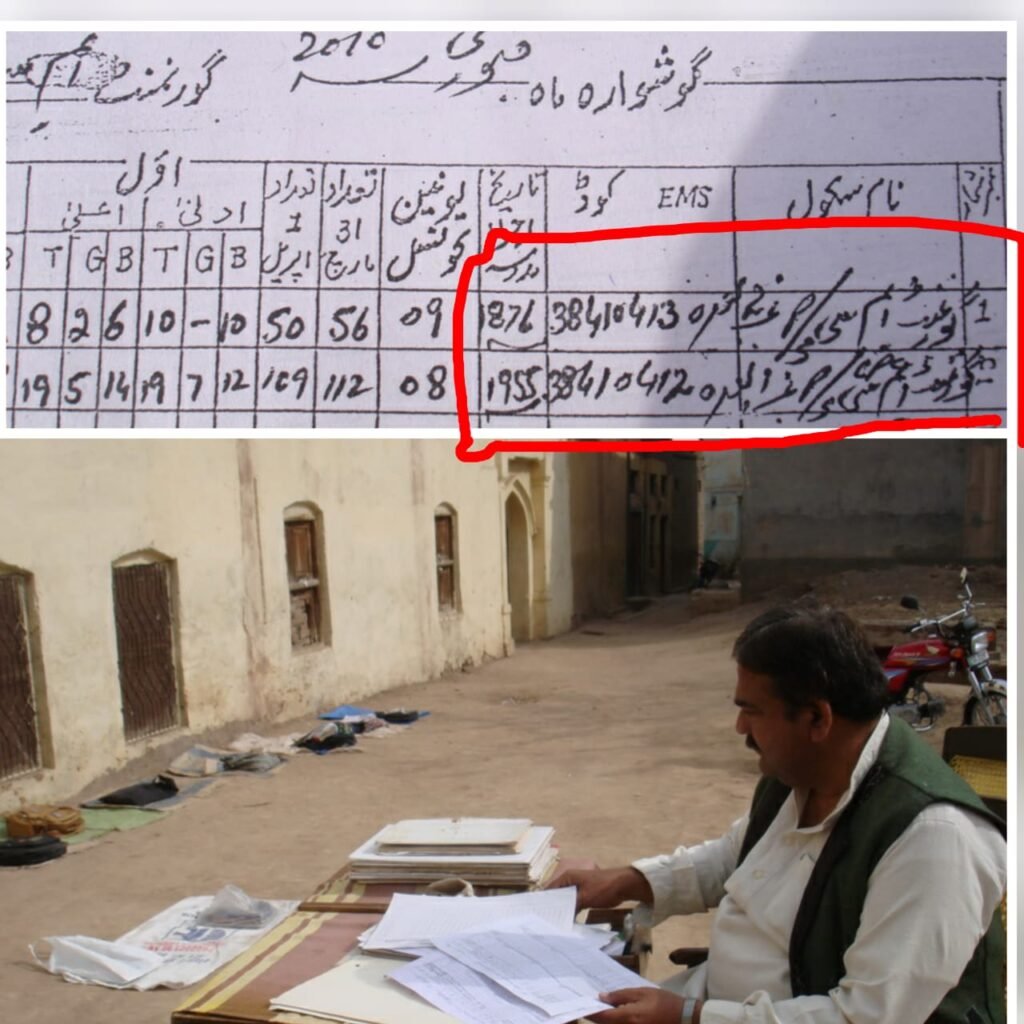
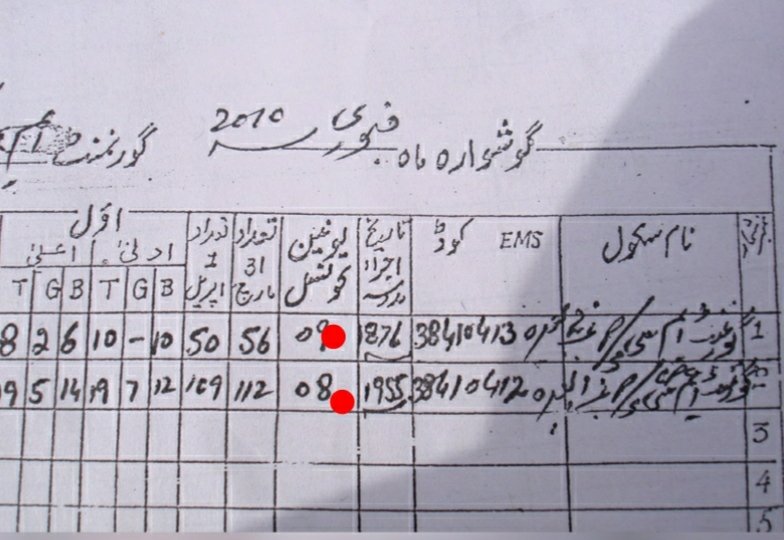
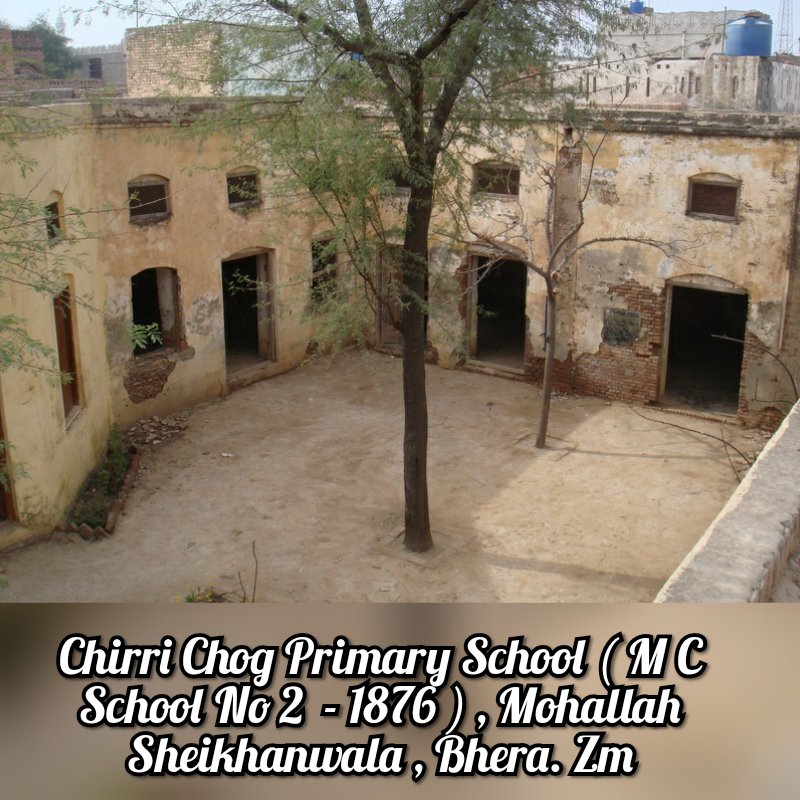
1 . Government High School, Bhera. The Municipality of Bhera was established in 1867.The Municipal Committee Primary School No. 2, Mohalla Sheikhanwala—popularly known as Chirri Chong Primary School—was founded in 1876 and functioned up to Class IV.
District Board School was shifted from Shahpur to Bhera in 1864, being a more populated tehsil ( whether it was a middle or high school is not confirmed ). The Anglo-Vernacular High School, Bhera, likely attained the status of a high school in 1882. It was jointly maintained by the Education Department and the Municipal Committee.
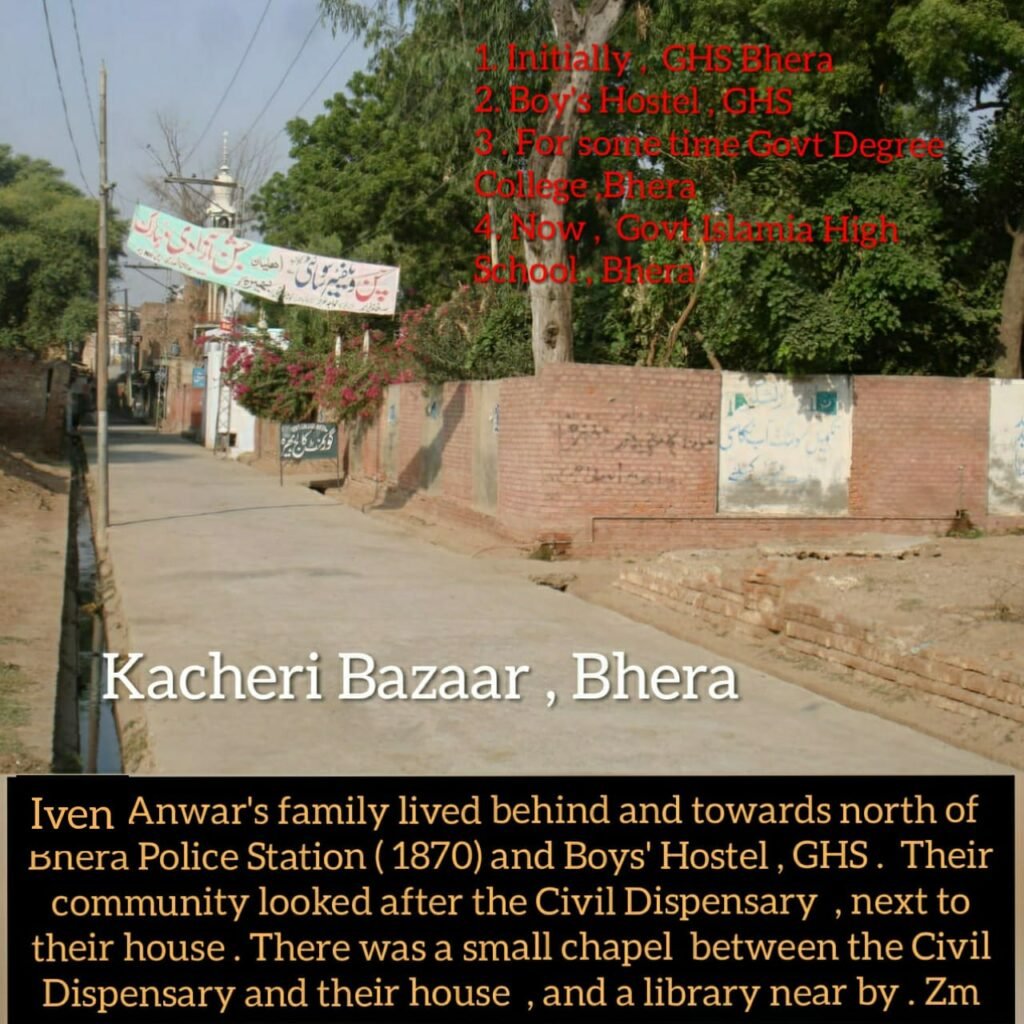
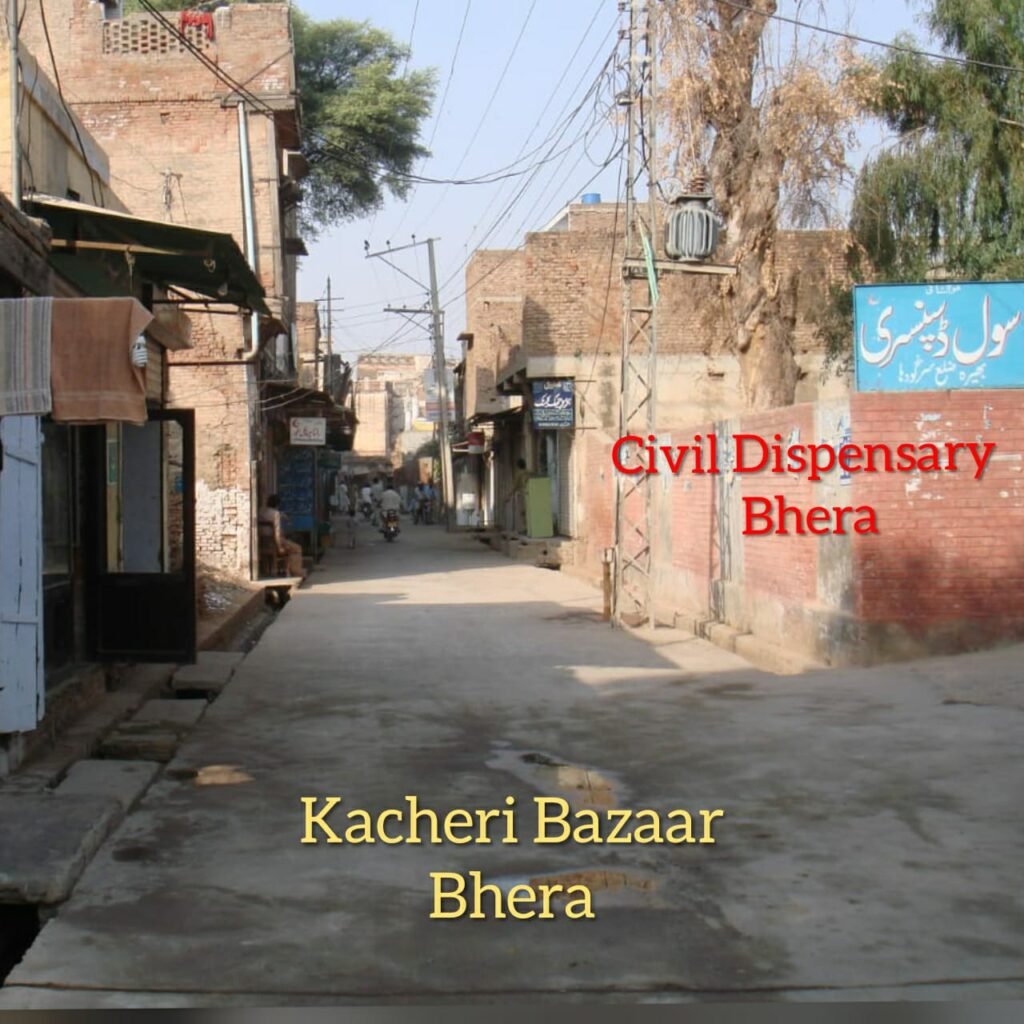
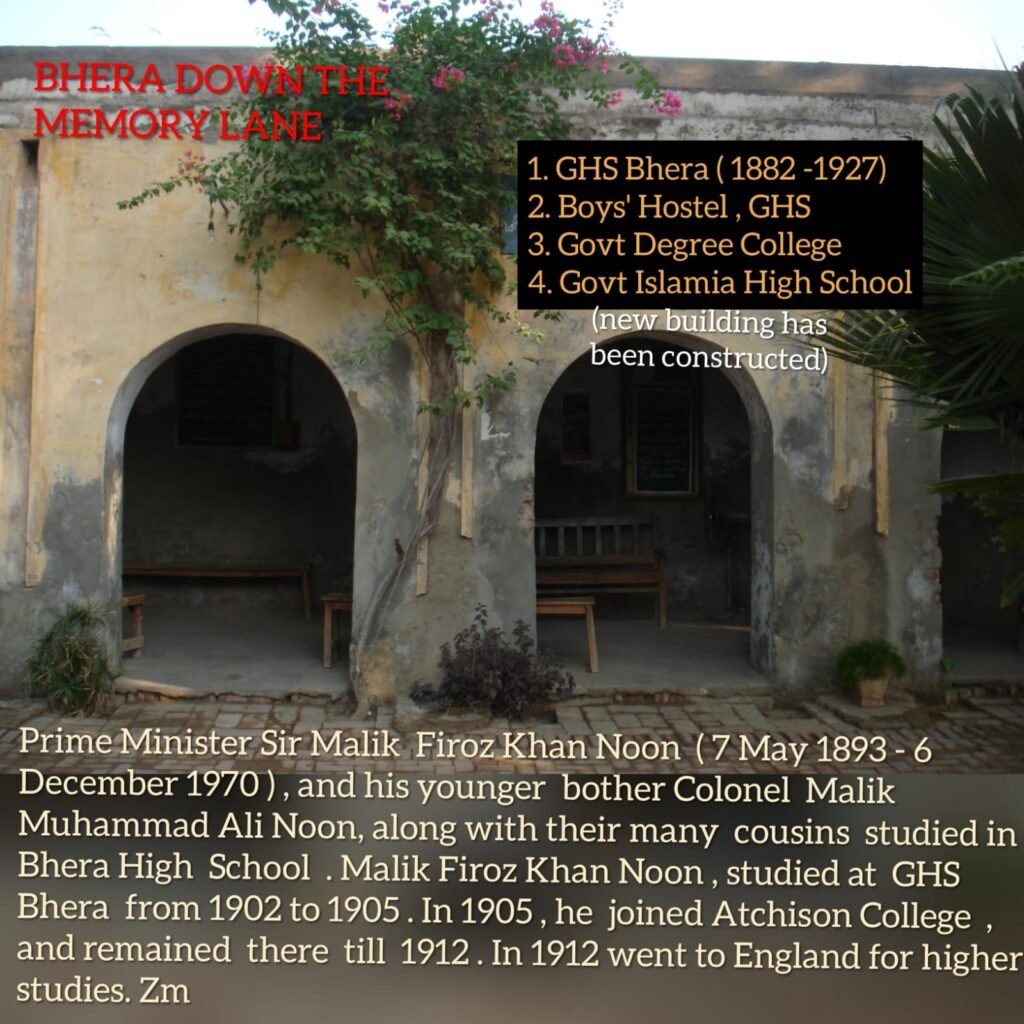
The school’s building was situated between the old Bhera Police Station (1870) and the Civil Dispensary in Kachery Bazaar.
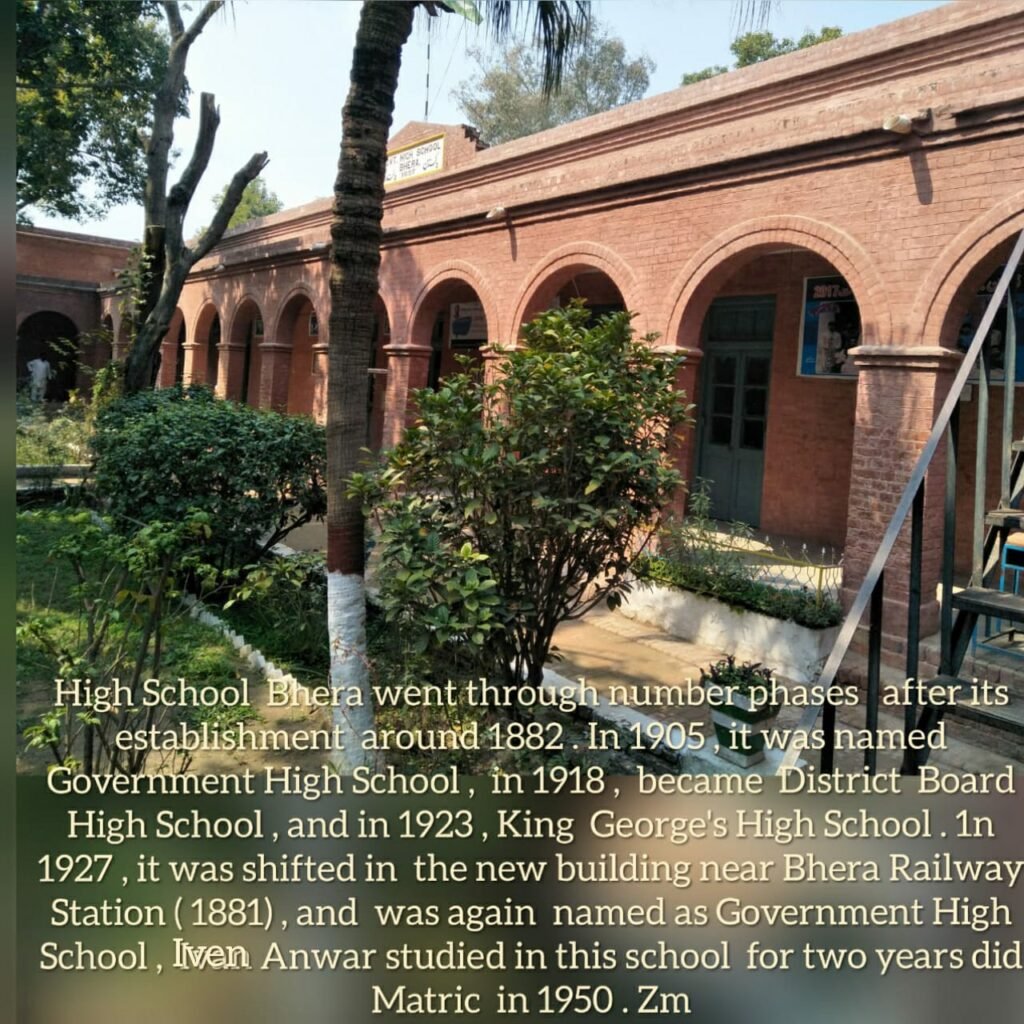
Chronological Evolution: Government High School, Bhera
*1864 :* District Board School, Shahpur ( not confirmed whether it was a middle or high school ). It was shifted to Bhera in 1864, being a more populated tehsil.
*1882 :* Most likely, the District Board School was given the status of a high school ( fact being confirmed through documentary evidence ).
*1905 :* Named Government High School, Bhera.
*1918:* Again became District Board High School.
*1923:* Renamed King George’s High School.
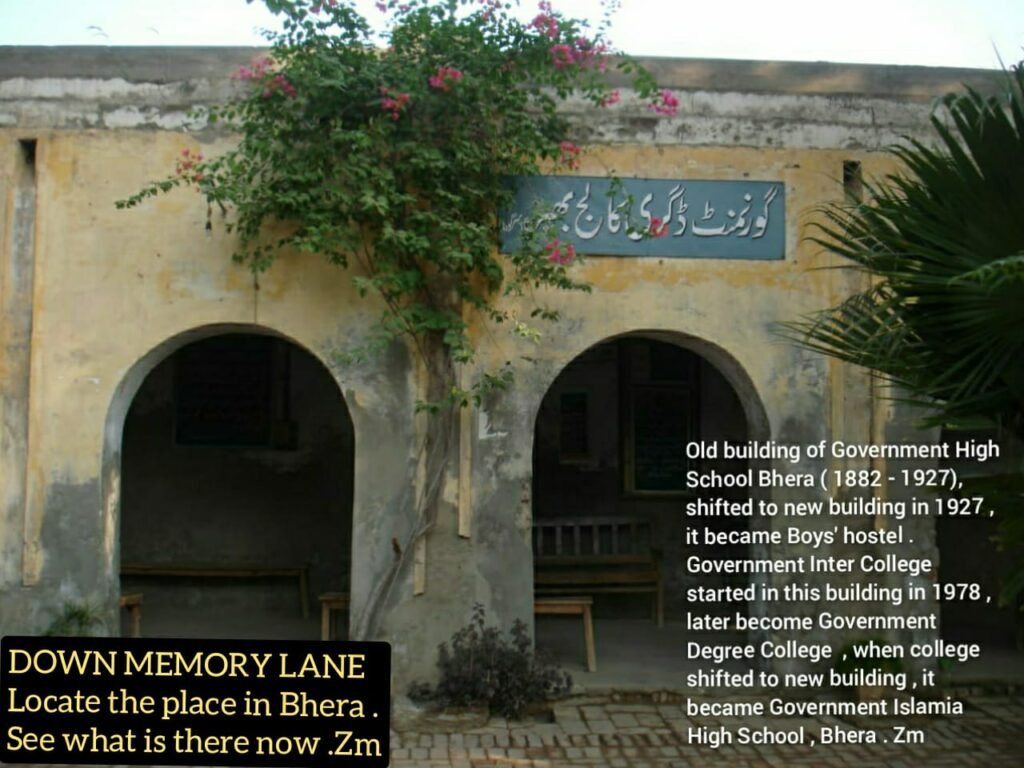
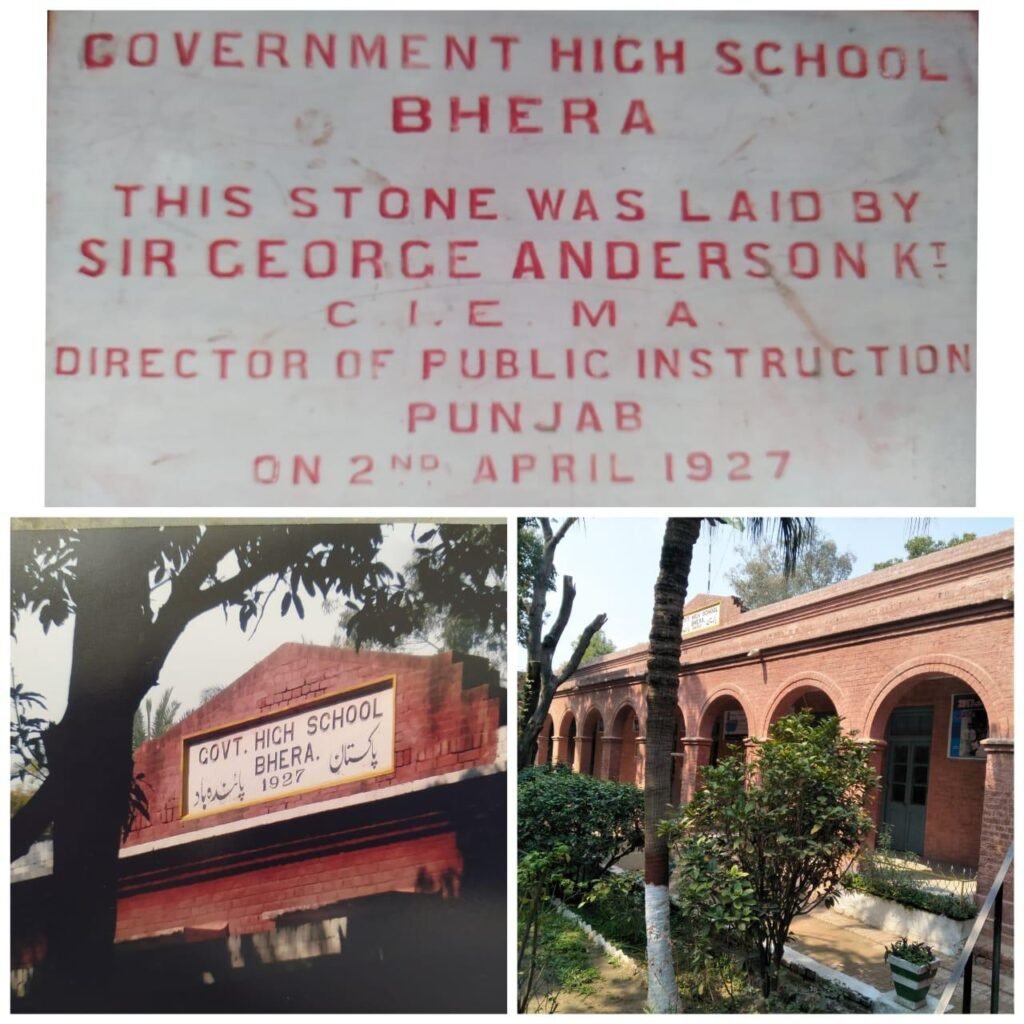
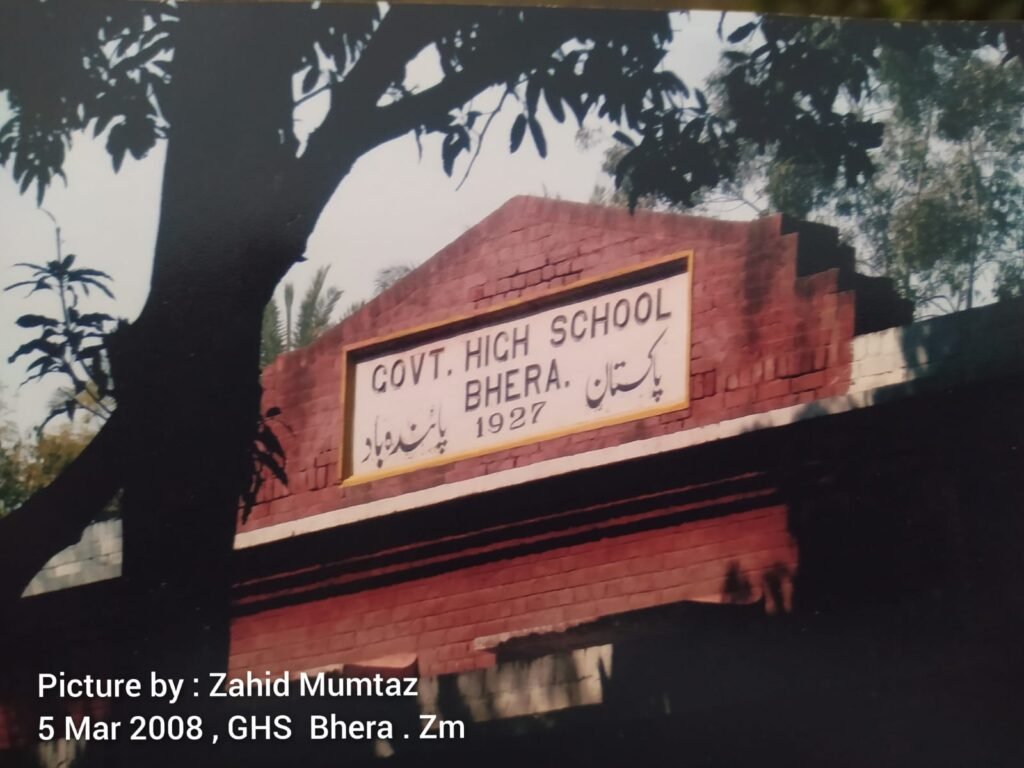
*1927:* Shifted to the new building near the railway station and once again renamed Government High School, Bhera.
The old building was converted into the Boys’ Hostel. Government High School, Bhera, was one of the most prominent institutions of the district. There were many notable students, far too many to list. Students from far-flung areas attended GHS Bhera because of its hostel and its reputation as a premier institution of the region.
2 . Kirpa Ram Anglo–Sanskrit High School (Arya School). The second high school in Bhera was an unaided Anglo–Sanskrit High School, established at the beginning of the 20th century.
It was founded by the family of Kirpa Ram Sahni (Ref: The Imperial Gazetteer of India, Vol. III, 1908 Edition). It later became widely known as the Arya School. It was situated on the road from the Telephone & Telegraph Office to the railway station on the left side. Opposite the school were: Jhaleewala Bagh and a Mughal-era brick-lined pond with steps, known as Kapoor Talab.
Maya Devi Gymnasium (1939). In 1939, Baboo Ralla Ram Chopra donated the Maya Devi Gymnasium to Arya High School, named after his wife. The foundation stone was laid by Sheikh Zahur-ud-Din, Inspector of Schools, Rawalpindi Division, on 2 July 1939. The inscription on the stone reads:
THE STRENGTH OF THE YOUNG
IS THE STRENGTH OF THE NATION
Today, the old building and the entire premises of Arya High School form part of the Government Girls Higher Secondary School, Bhera, with additional blocks added over a period of time.
Notes :
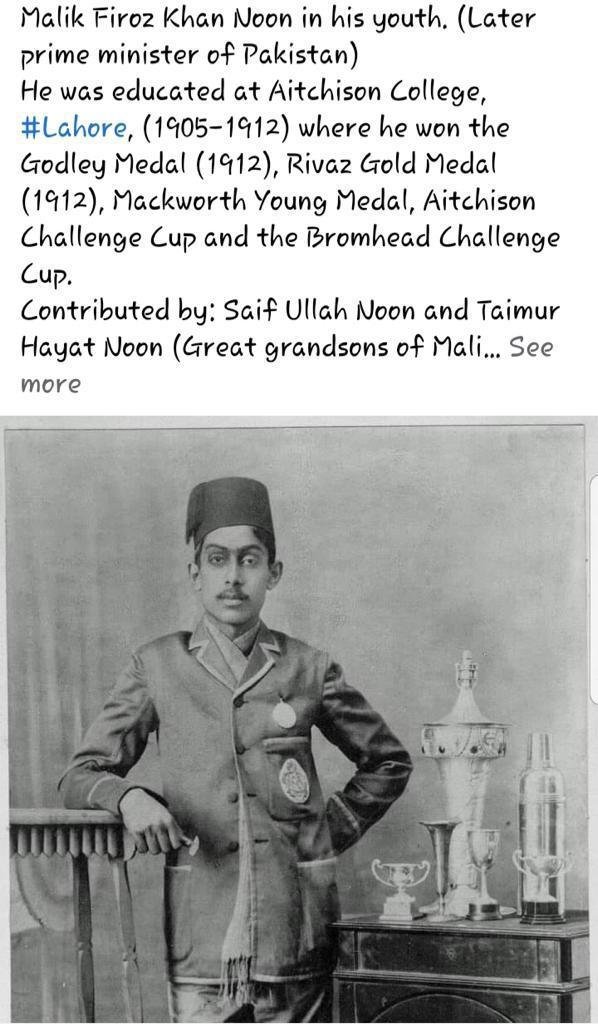
1 . Sir Malik Firoz Khan Noon ( 7 May 1893 – 6 Dec 1970), Prime Minister of Pakistan, studied at GHS Bhera from 1902 to 1905. Joined Aitchison College in 1905 and remained there till 1912. Proceeded to England in 1912 for higher studies (Reference : Autobiography “From Memory”)
2 . PM Feroz Khan’s younger brother, Colonel Malik Muhammad Ali Noon, Armoured Corps, along with many cousins, also studied at Bhera High School. Daughter of Colonel Muhammad Ali Noon, Musarat Zia Noon, shared a group photo of her father at the Temporary School for Indian Cadets ( TSIC) , Daly College. Indore, British India ( Circa: 1919 ). Her father was from the first batch of commissioned officers after World War I. Based on the group photo, I have written a bibliographic sketch of Col Muhammad Ali Noon. It is available and can be shared on Whatsapp and Email. My Whattapp No 0317 5404161 and Email: sheikhzahidmumtaz@gmail.com.
3 . Reference: Bhera in 1908, Extracts from the Imperialism are in the Gazetteer of India, Vol-VIII, page 232, 233 & 235, Berhampore to Bombay).
Bhera Town. Headquarters of the tehsil of the same name in Shahpur district, Punjab, situated at 32 degrees 28 degrees N and 72 degrees 56 degrees E, on the left bank of the Jhelum River, at the terminus of the Bhera branch of the North-Western Railway. Population (1901), 18,680. The original city, which lay on the right bank, was identified by Alexander Cunningham with the capital of Sophytes, contemporary of Alexander the Great, but recent authorities have shared the doubts he afterwards entertained as to the correctness of his theory. Bhera was sacked by Mahmud of Ghazni and two centuries later by the armies of Genghis Khan. The history of the old town closes in 1519, when it was held to ransom by Babar. Its importance is shown by the fact that the ransom was fixed at 2 lakhs, and tradition avers that shortly afterwards it was destroyed by the hill tribes. The new town was founded in or about 1540 around the fine mosque and tomb of a Muhammadan saint. The mosque has lately been restored. Bhera was the centre of a mahal under Akbar, and was plundered and laid waste by Ahmad Shah’s general, Nur-ud-din, in 1757. It was repopulated by the Sikh chieftains of the Bhangi confederacy and has greatly improved under British rule. It is the largest and most prosperous commercial town in this part of the Province, having a direct export trade to Kabul, the Derajat, and Sukkur, and importing European goods from Karachi and Amritsar. Ornamental knives and daggers are made in the town, and its jade-work and wood carving are widely known. It also has a long-established felt industry. The municipality was created in 1867. The income during the ten years ending 1902-3 averaged Rs. 22,400 and the expenditure Rs. 20,900. In 1903-4, the income was Rs. 26,100. The town possesses an Anglo vernacular high school, managed by the Educational department, and an unaided Anglo-Sanskrit high School, besides a Government dispensary. A vernacular newspaper, the Dost-i-Hind published in the town.
The American United Presbyterian Mission has a station at Bhera, where work was started in 1884. In 1901, the district contained 21 native Christians.